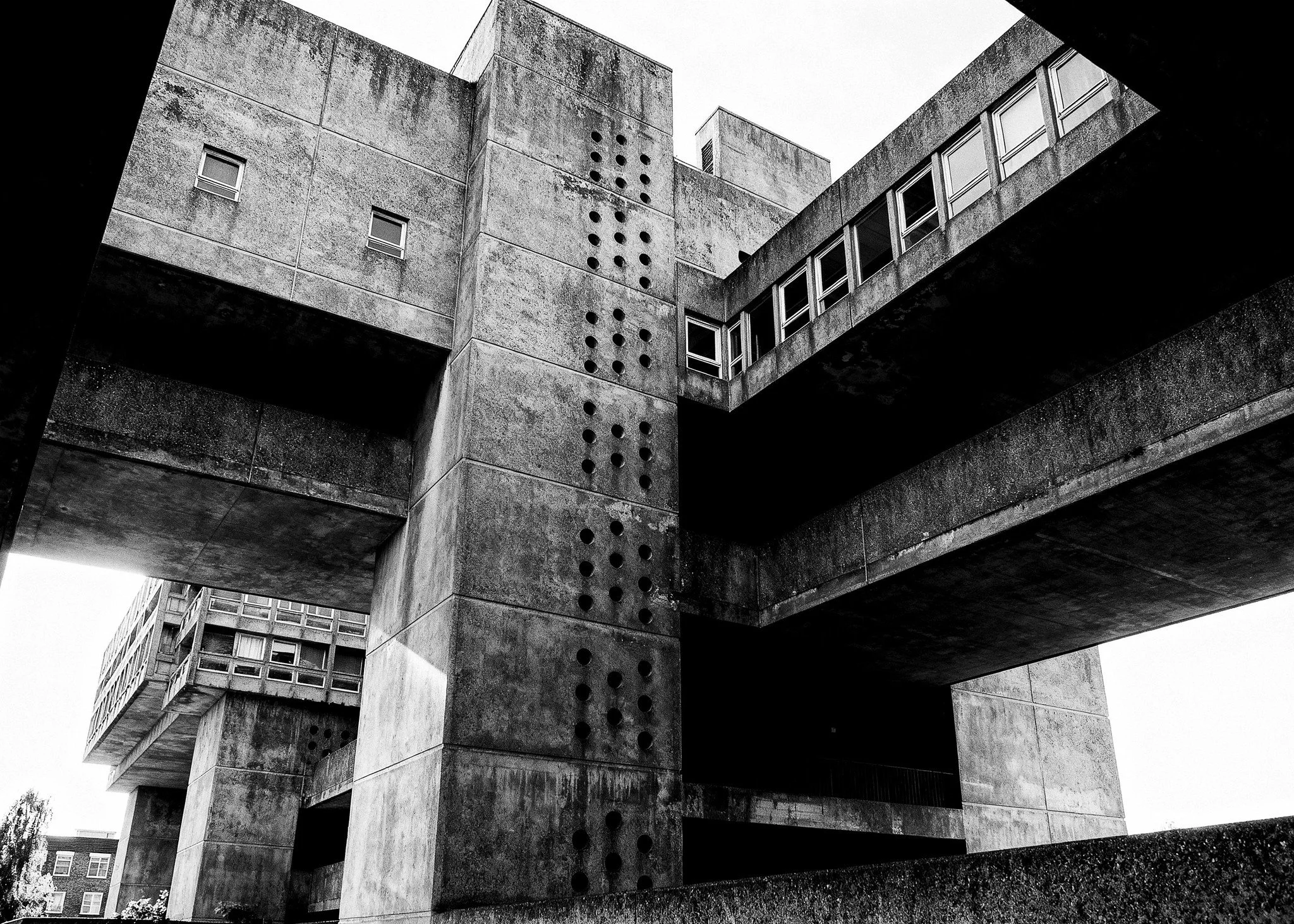
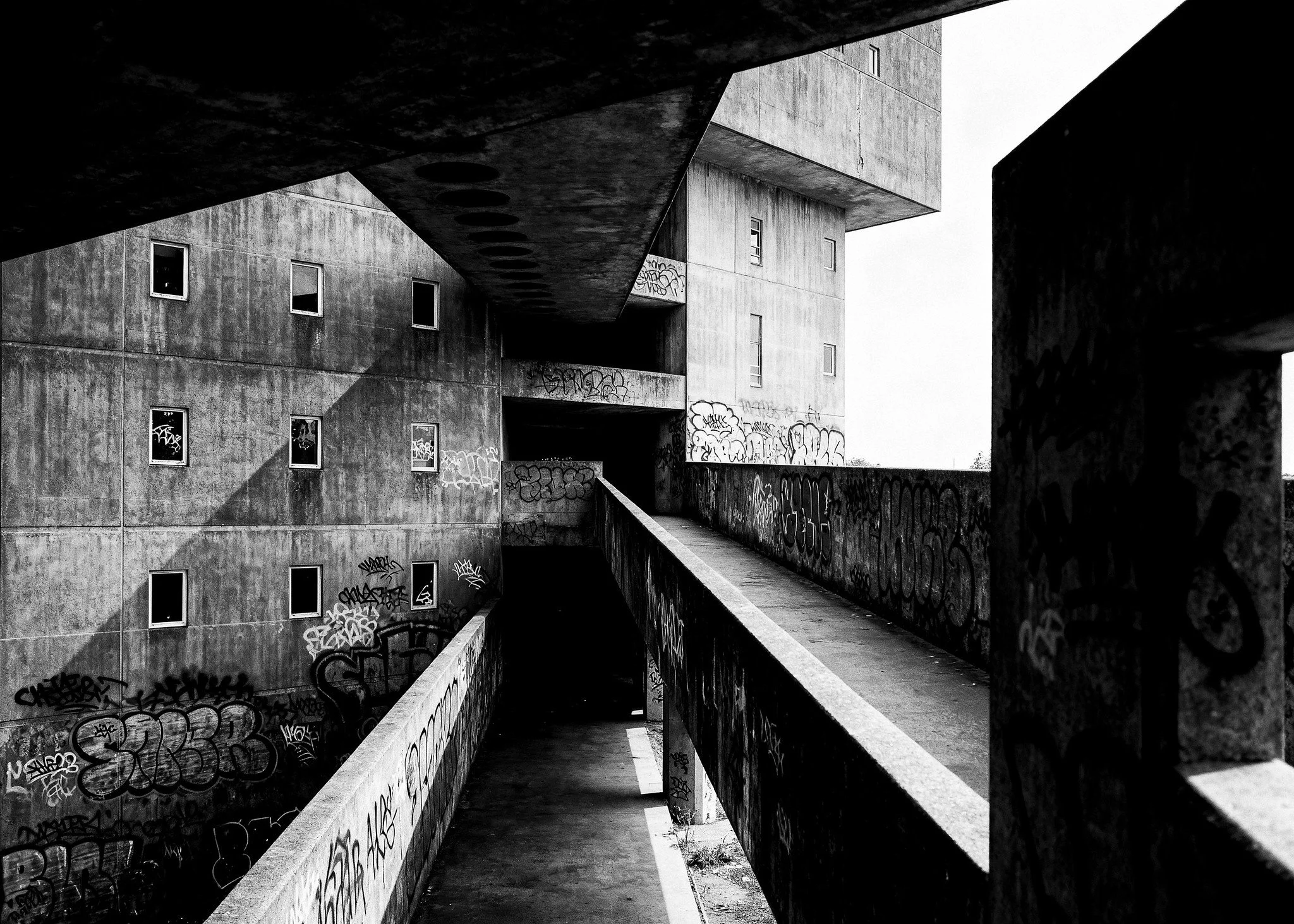
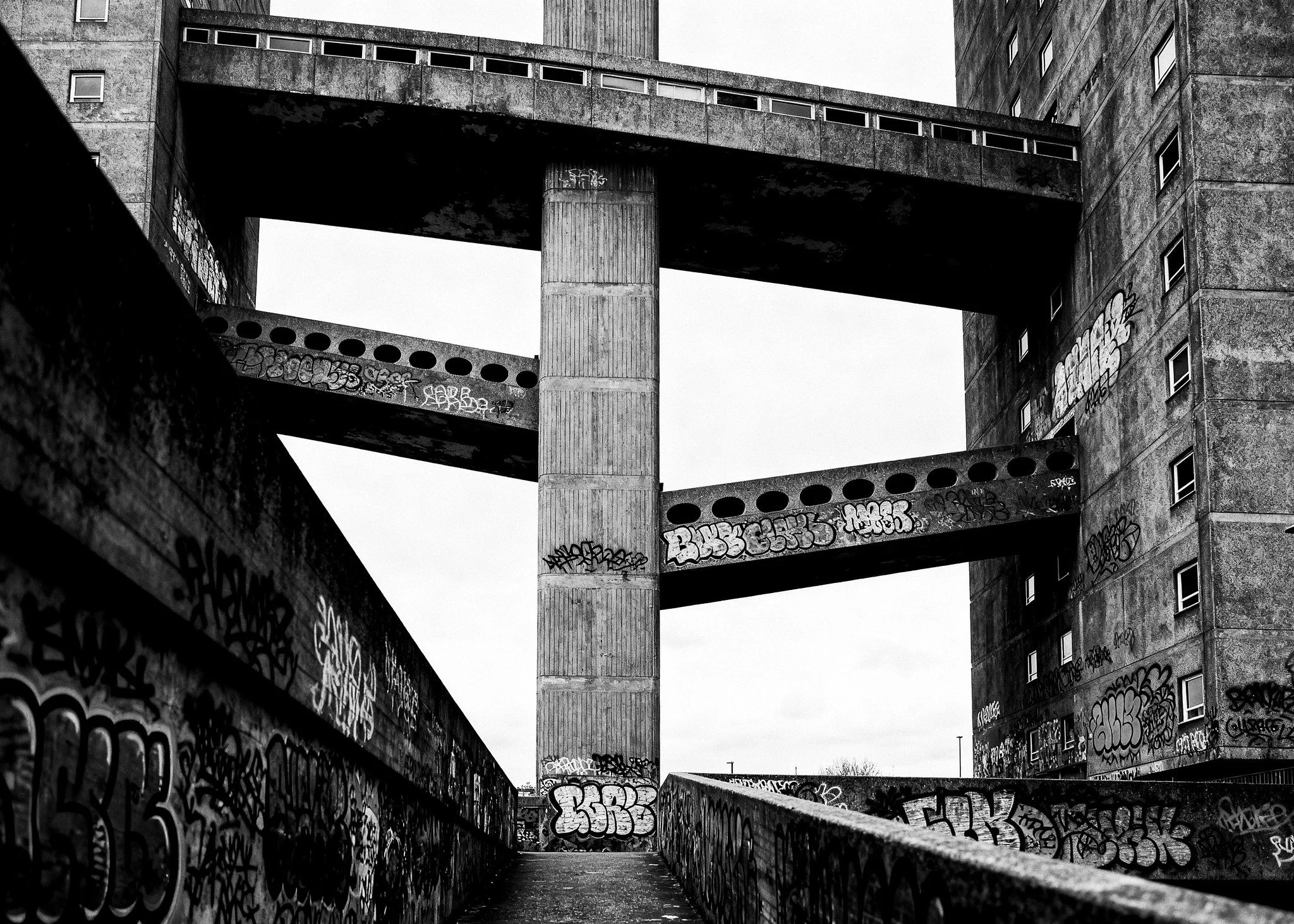
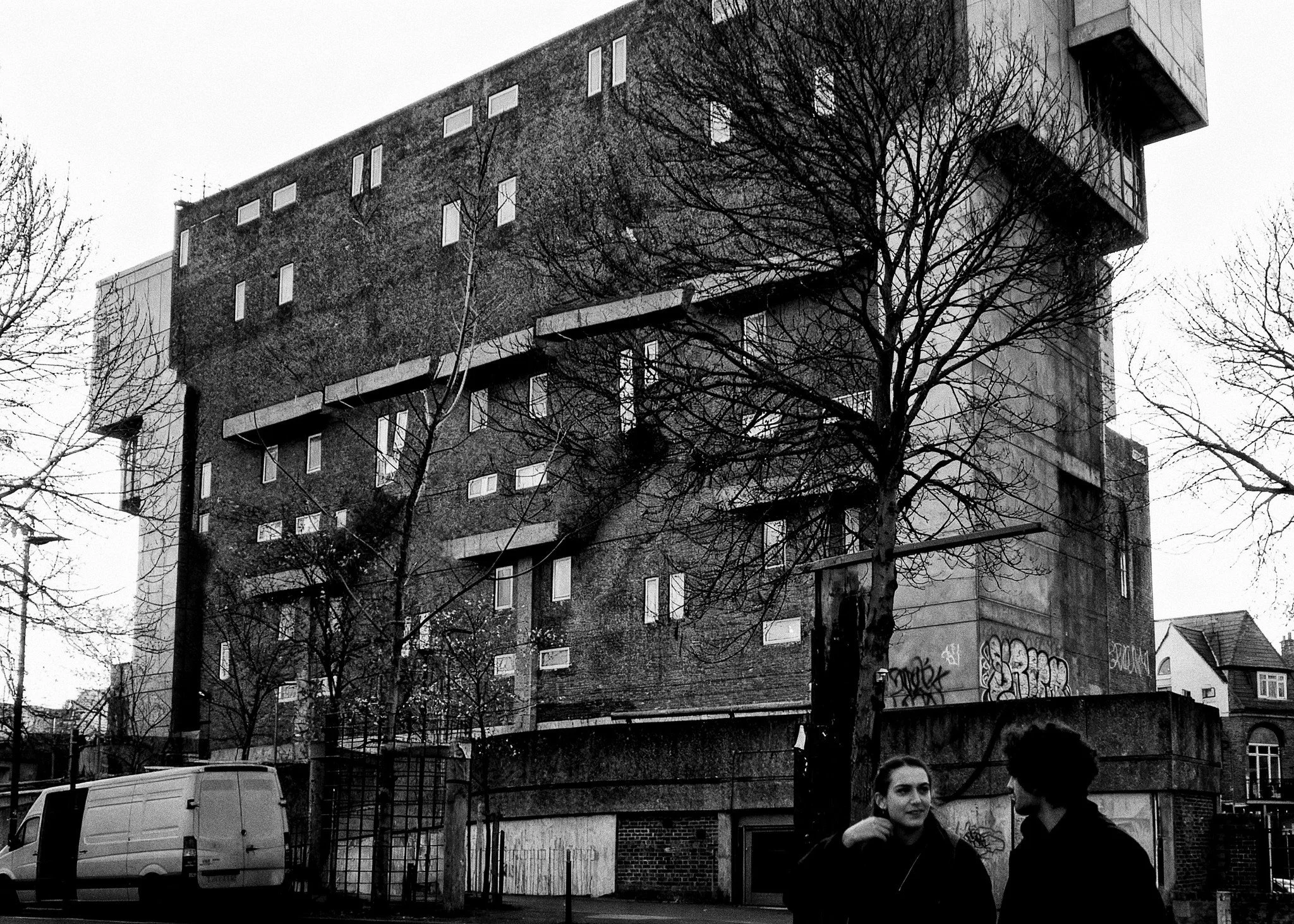
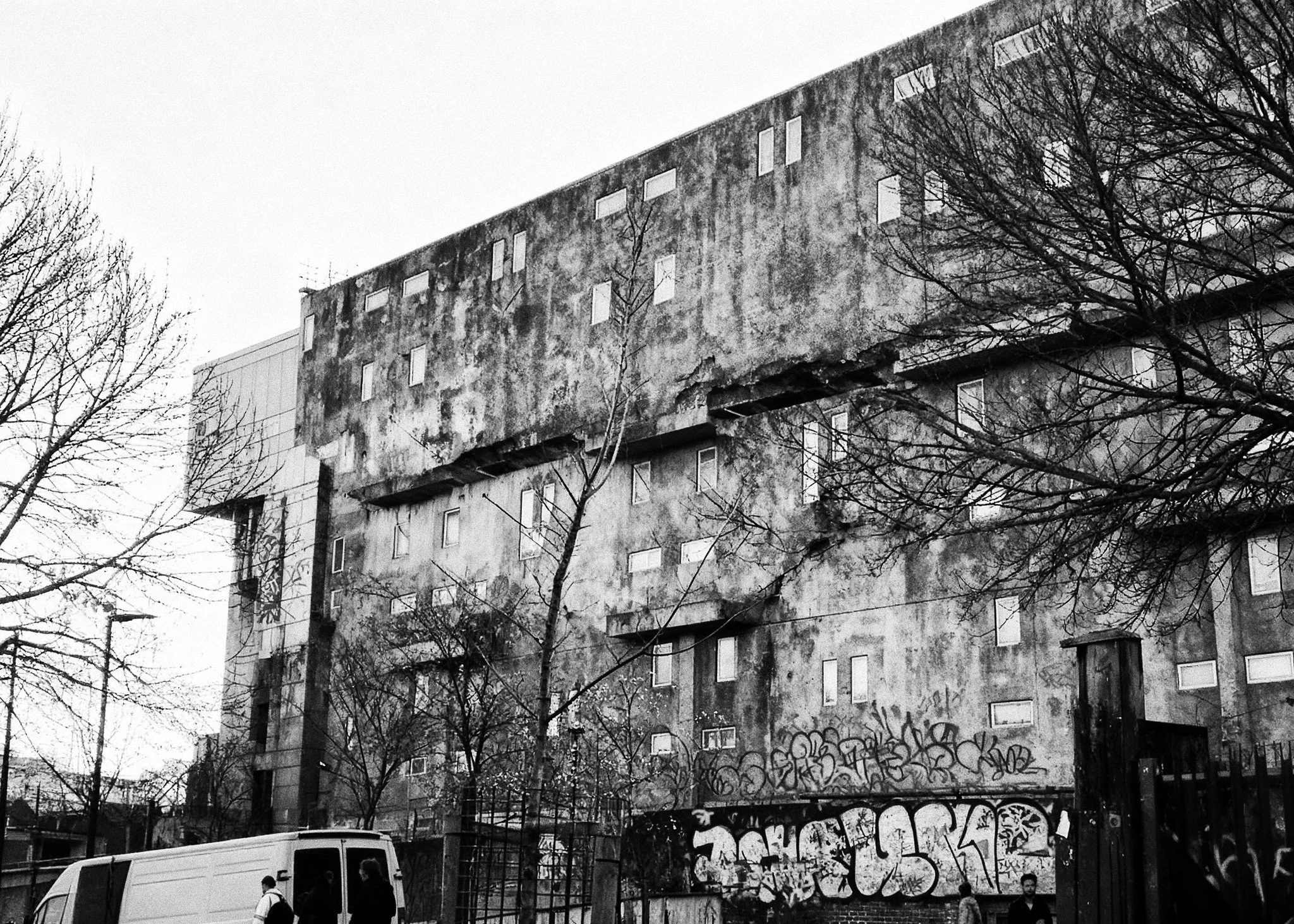
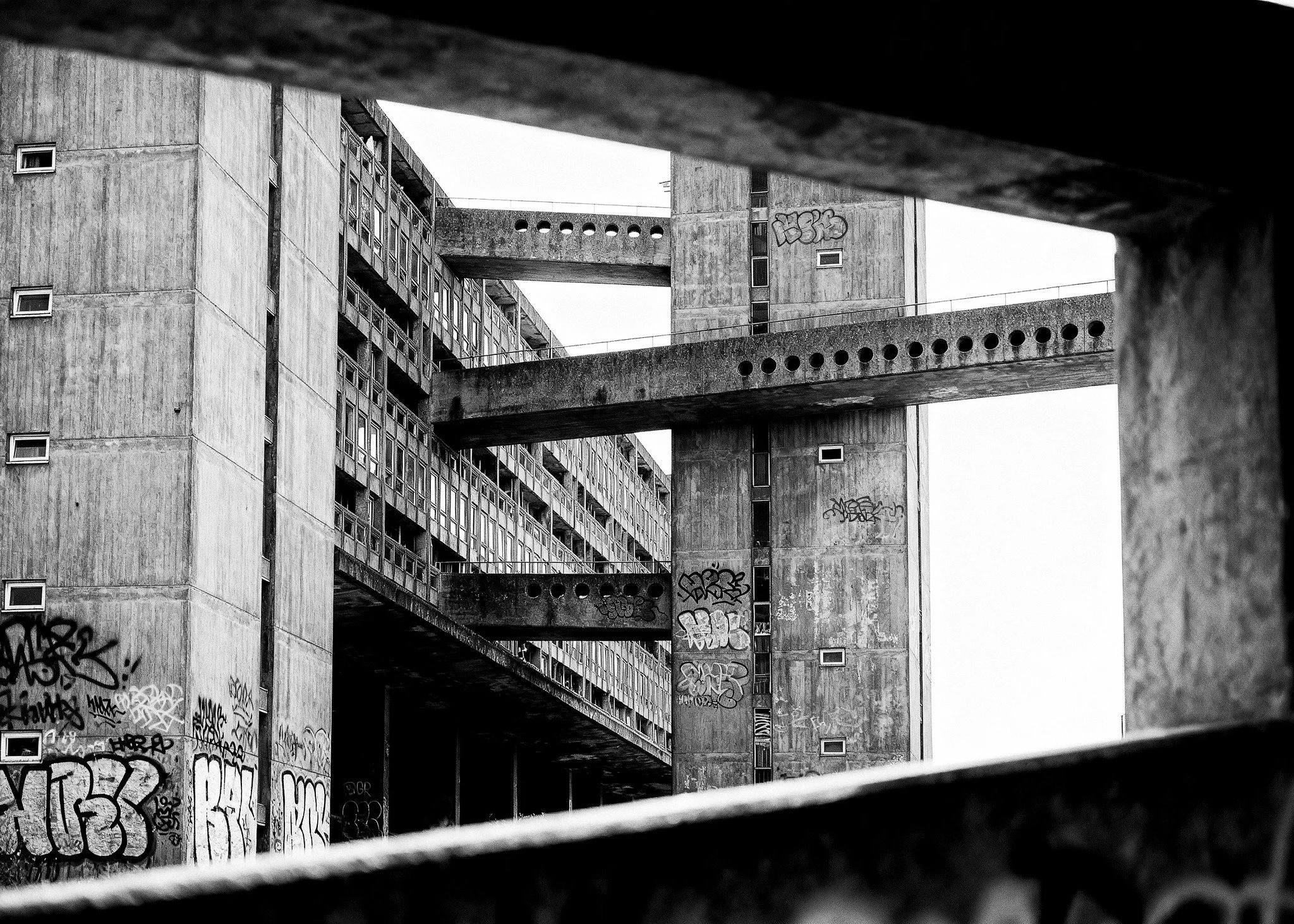
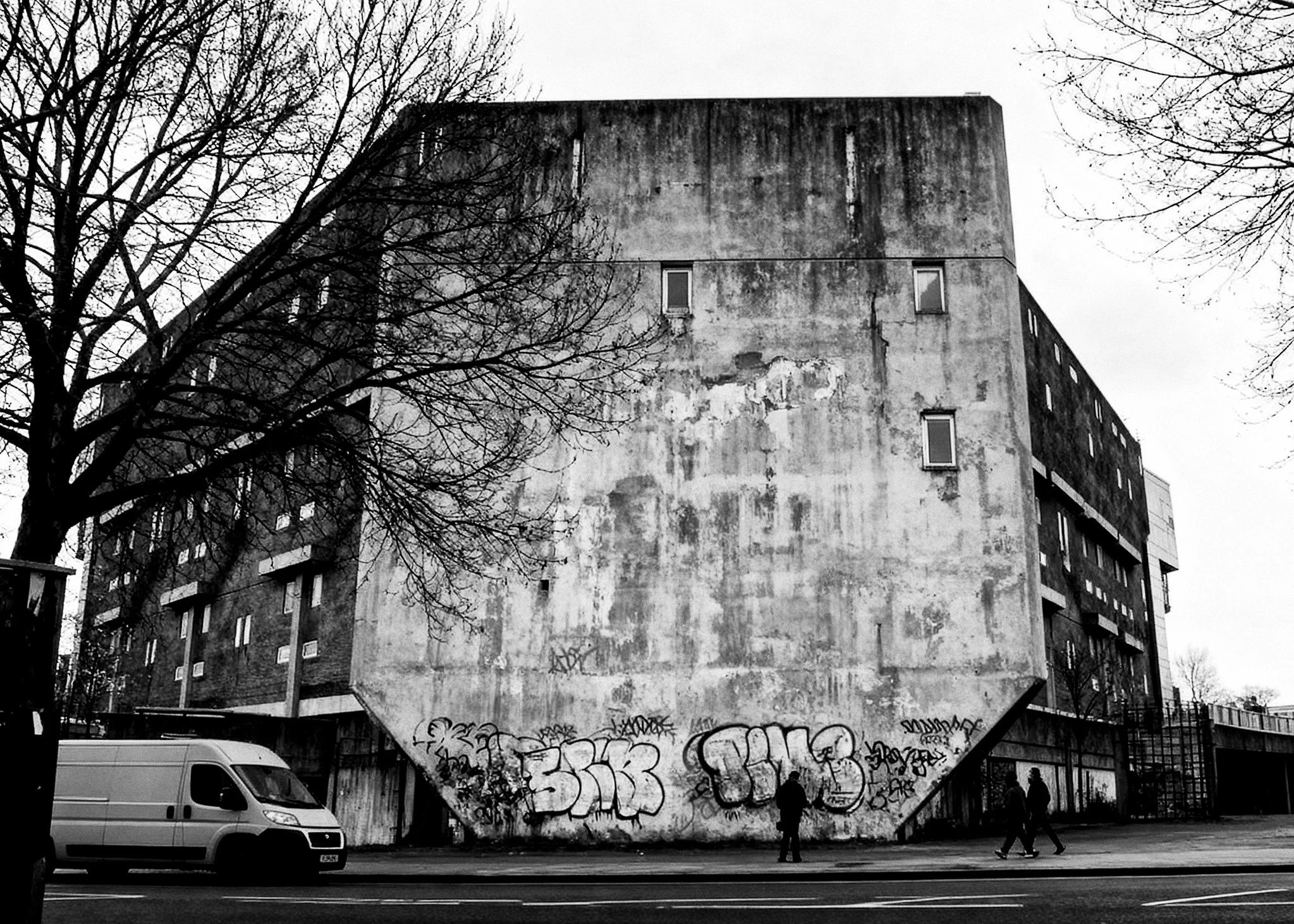
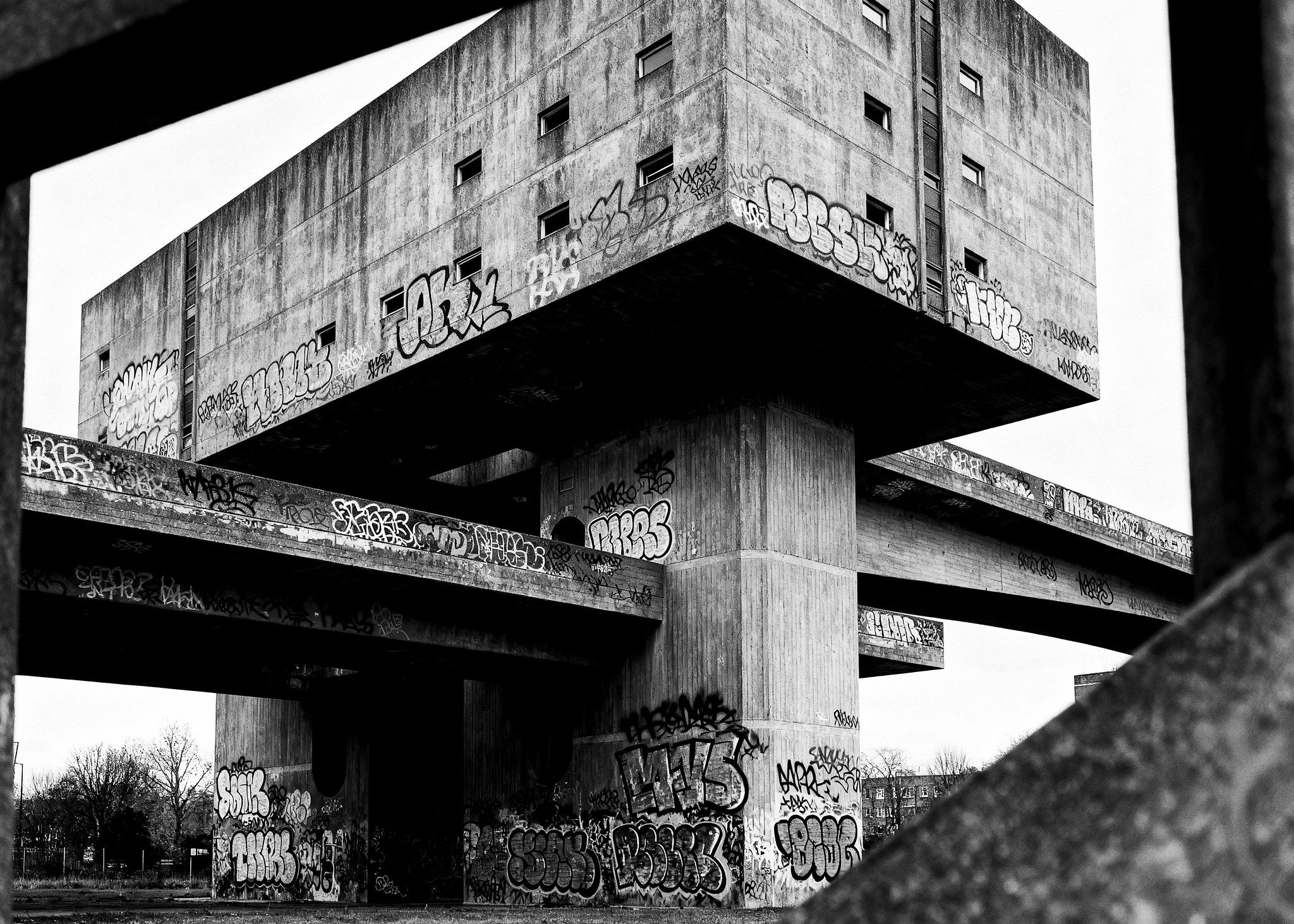
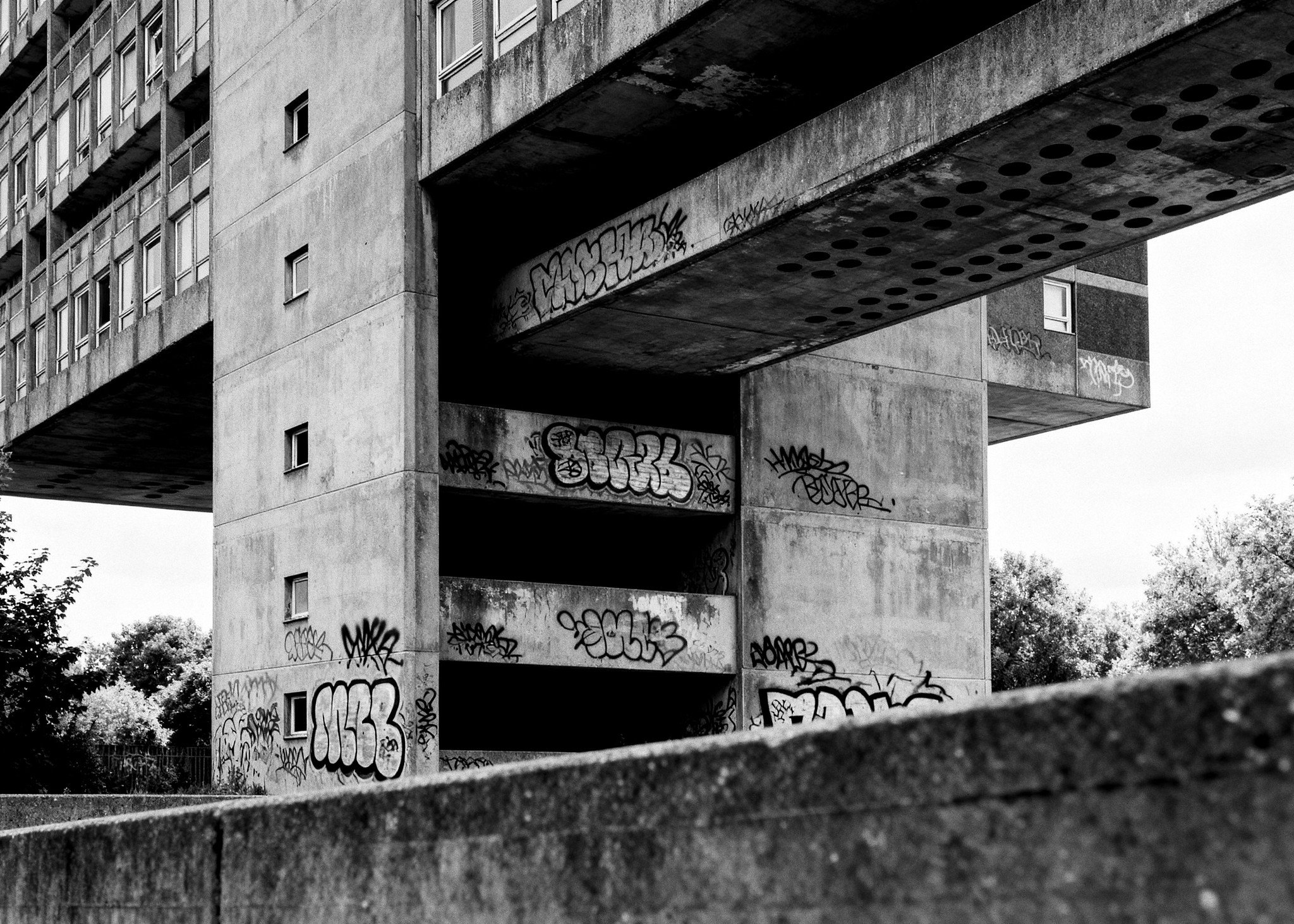
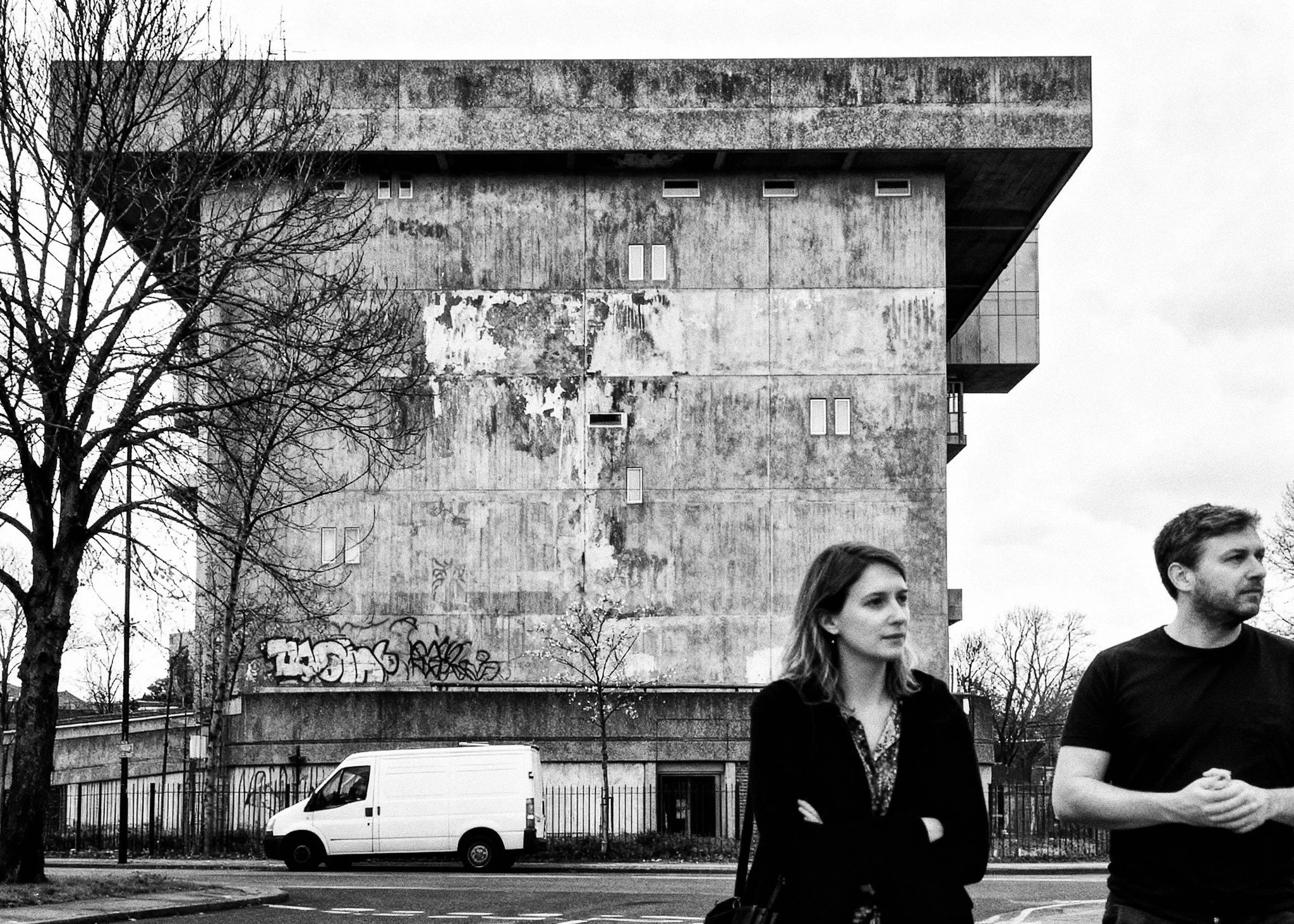
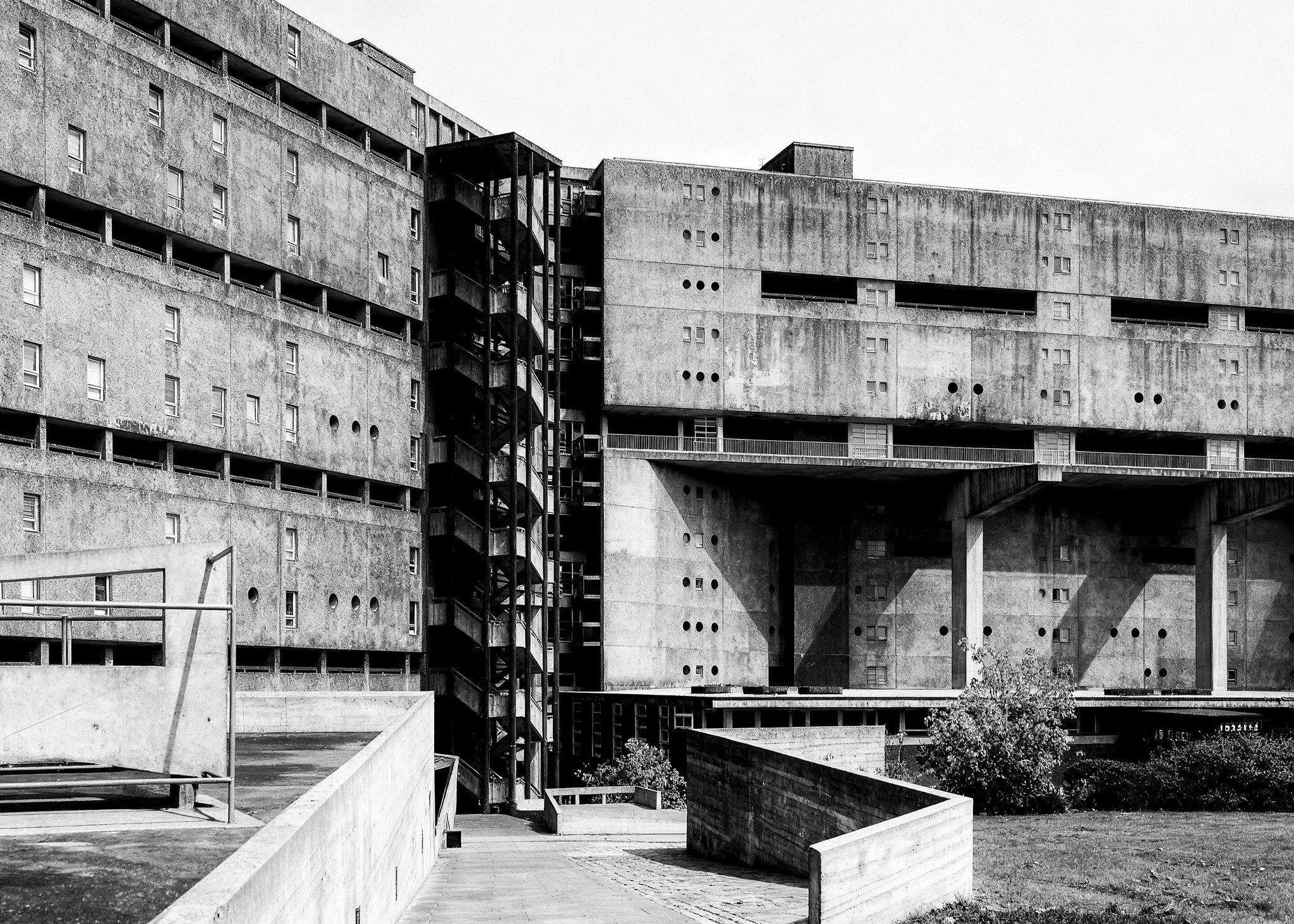
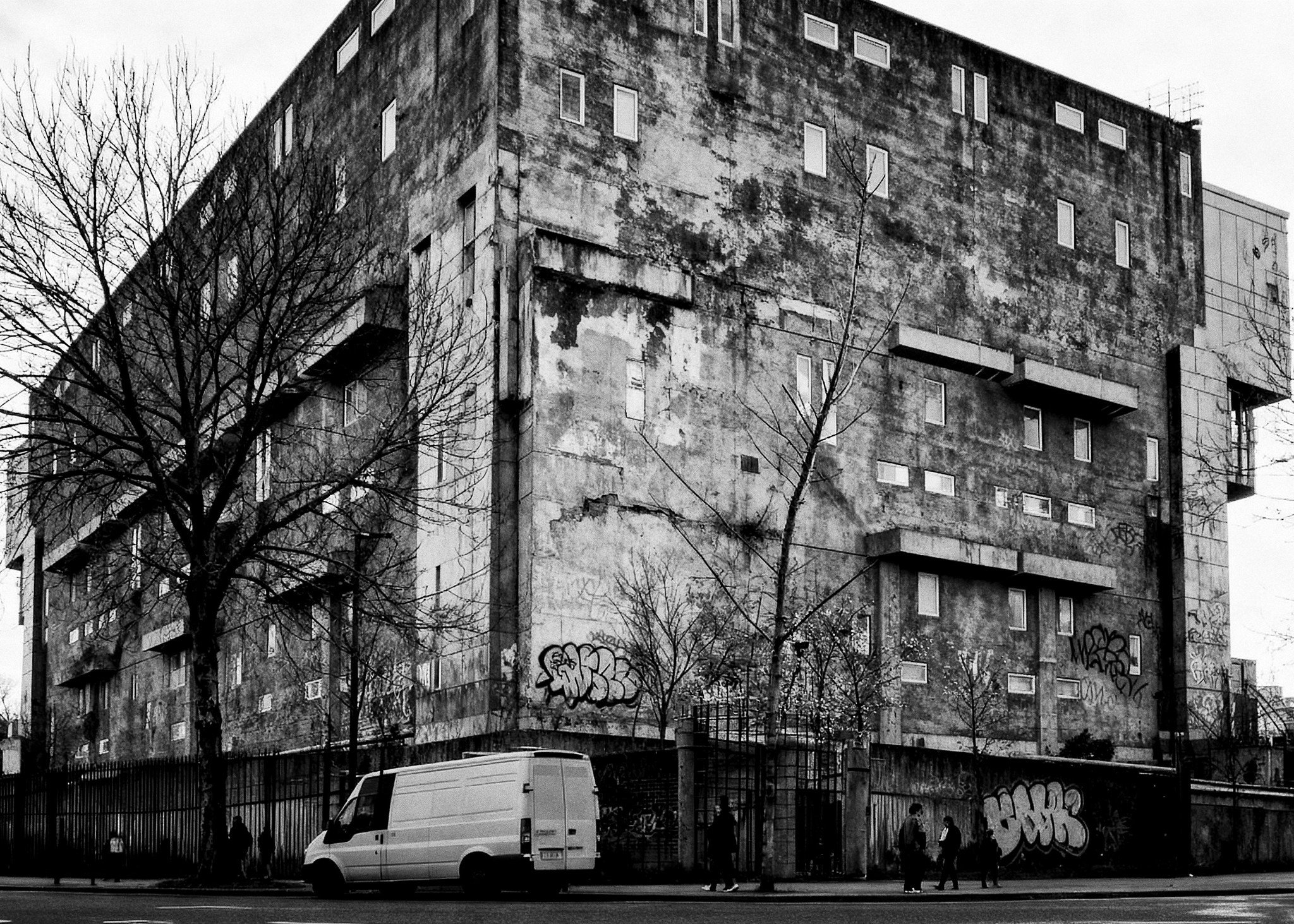
Post-War Mass Housing
After the Second World War, Britain needed millions of new homes, and quickly. Councils cleared bomb sites and slums and built estates on a scale the country had never seen. The architects believed good design could improve people’s lives: more daylight, indoor bathrooms, open space between the blocks. Concrete was cheap, fast and could be repeated endlessly.
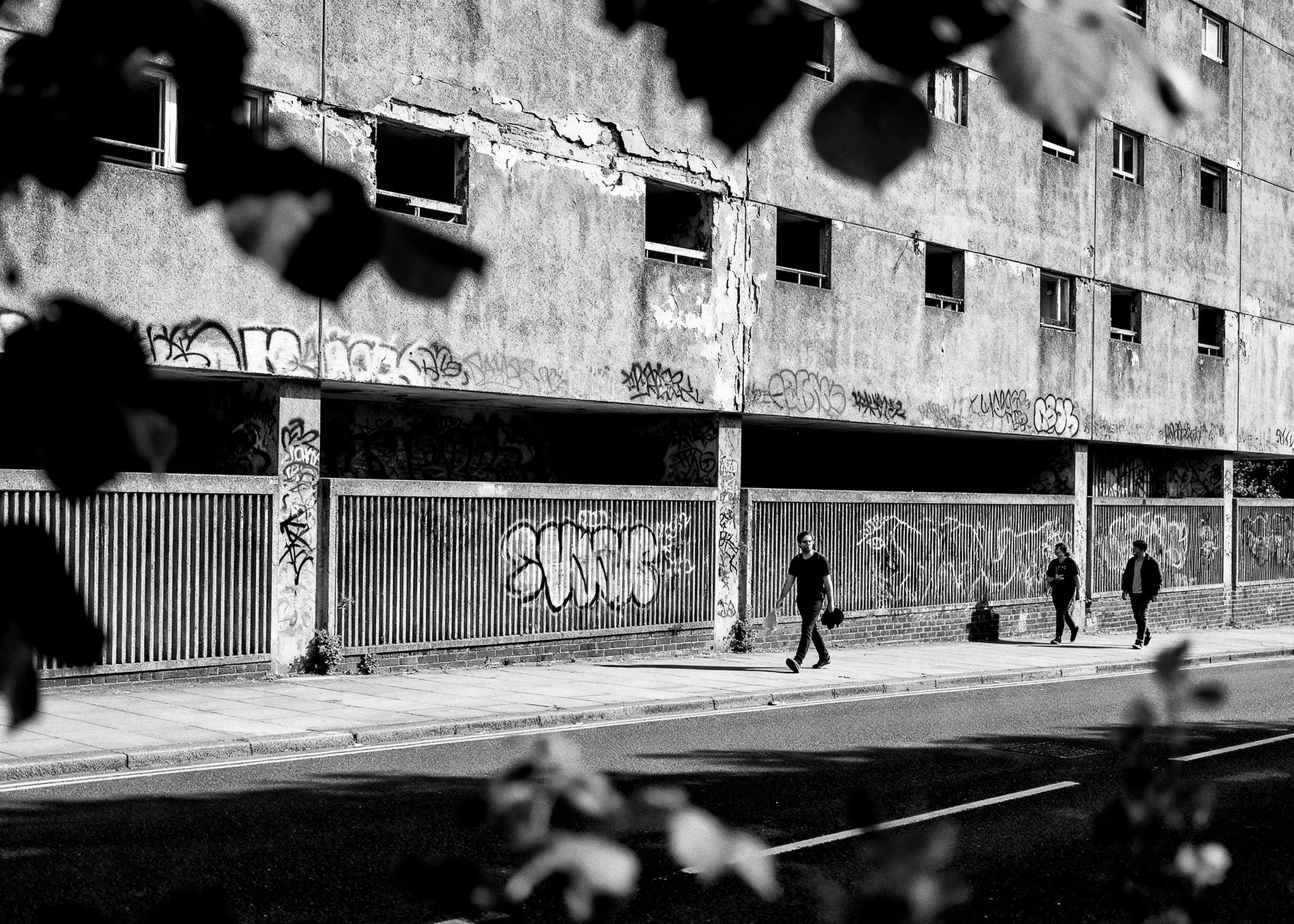
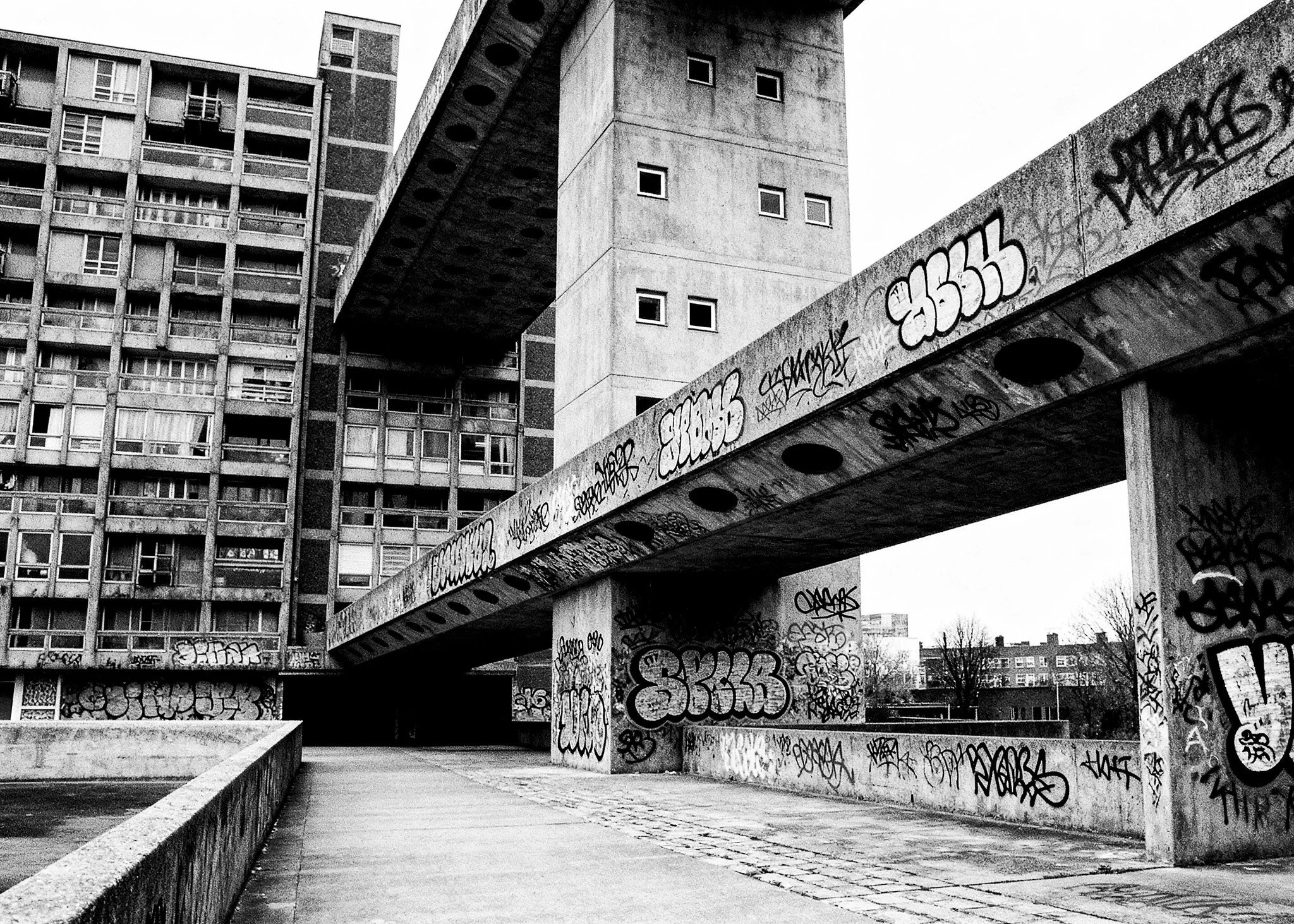
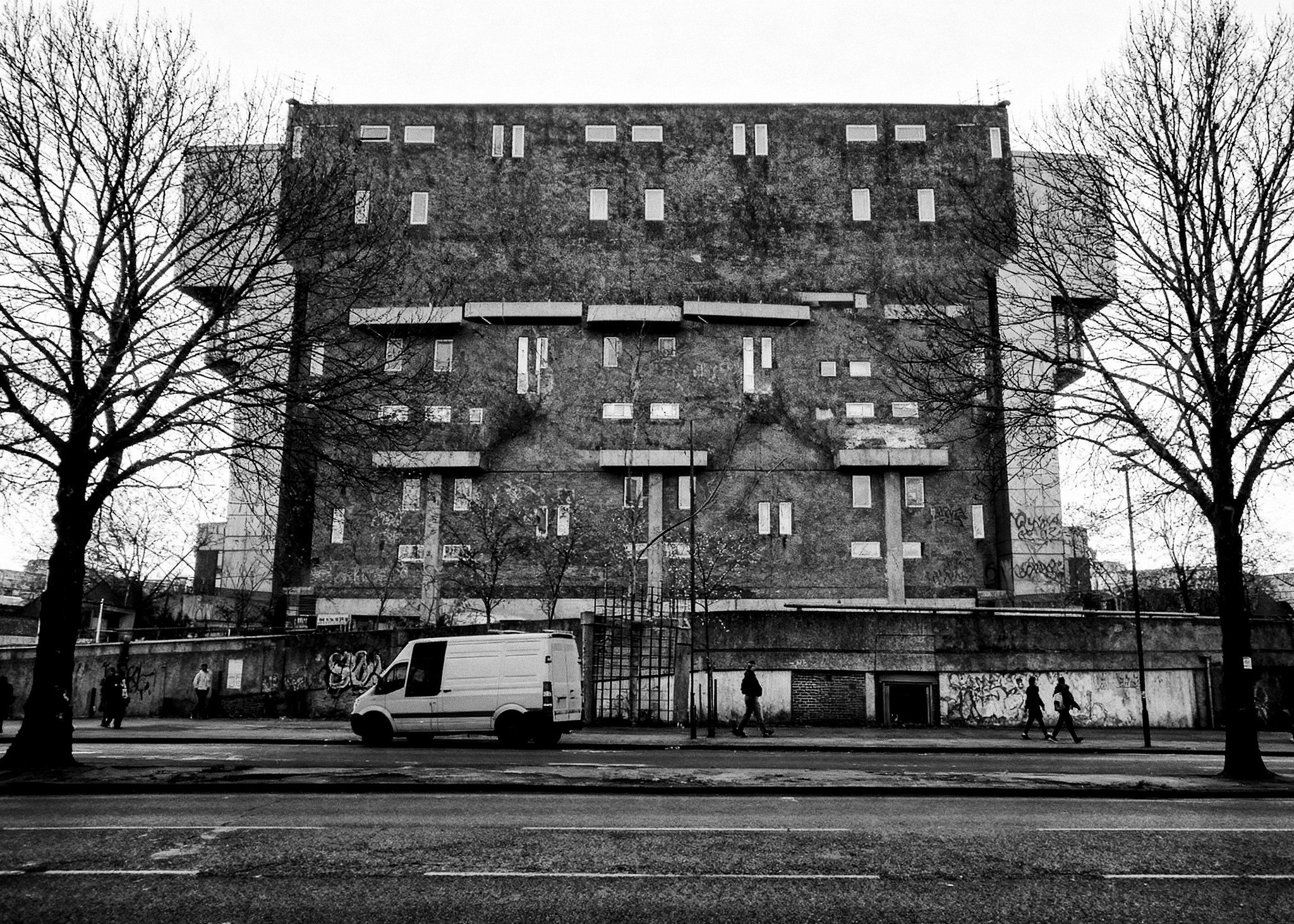
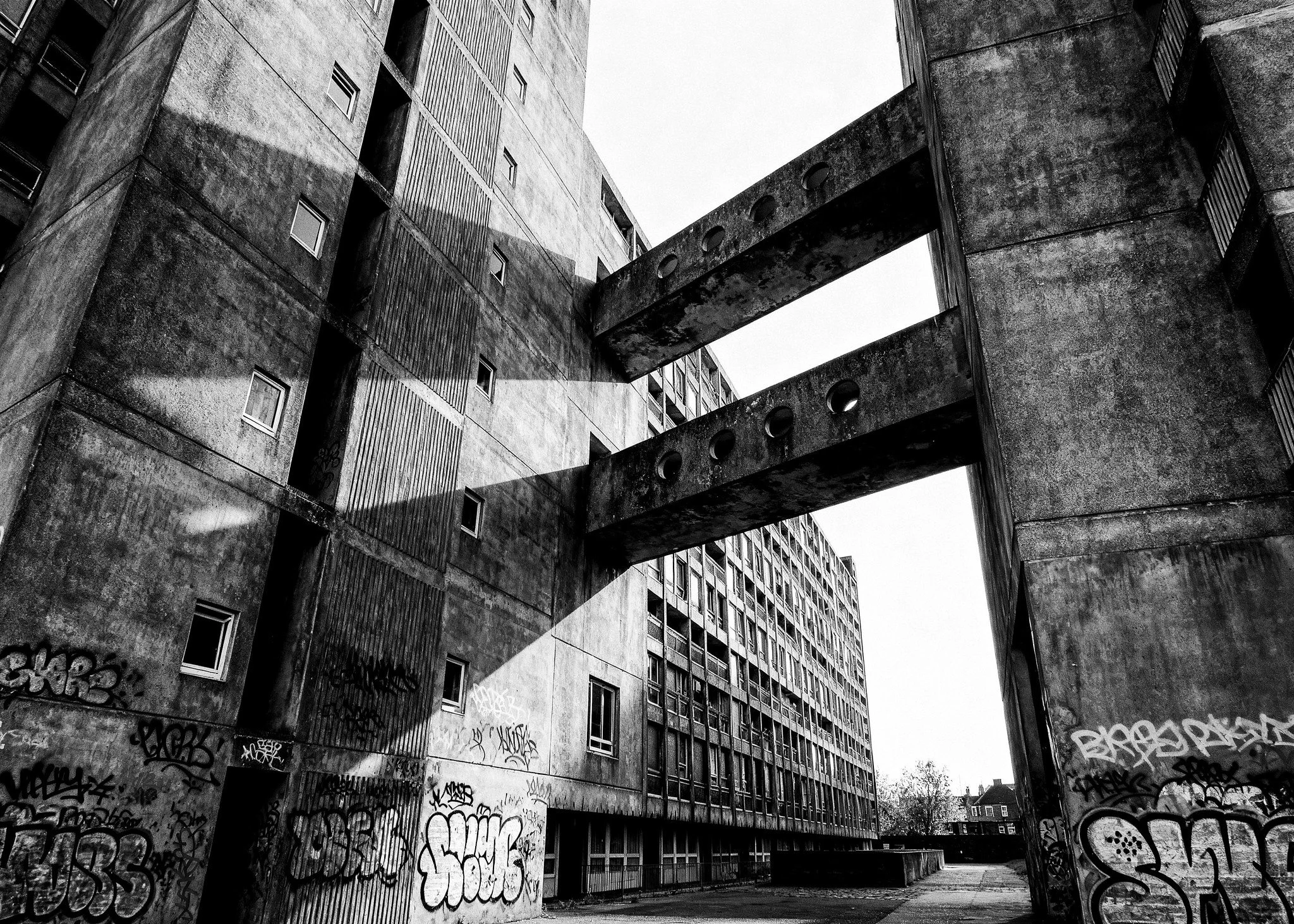
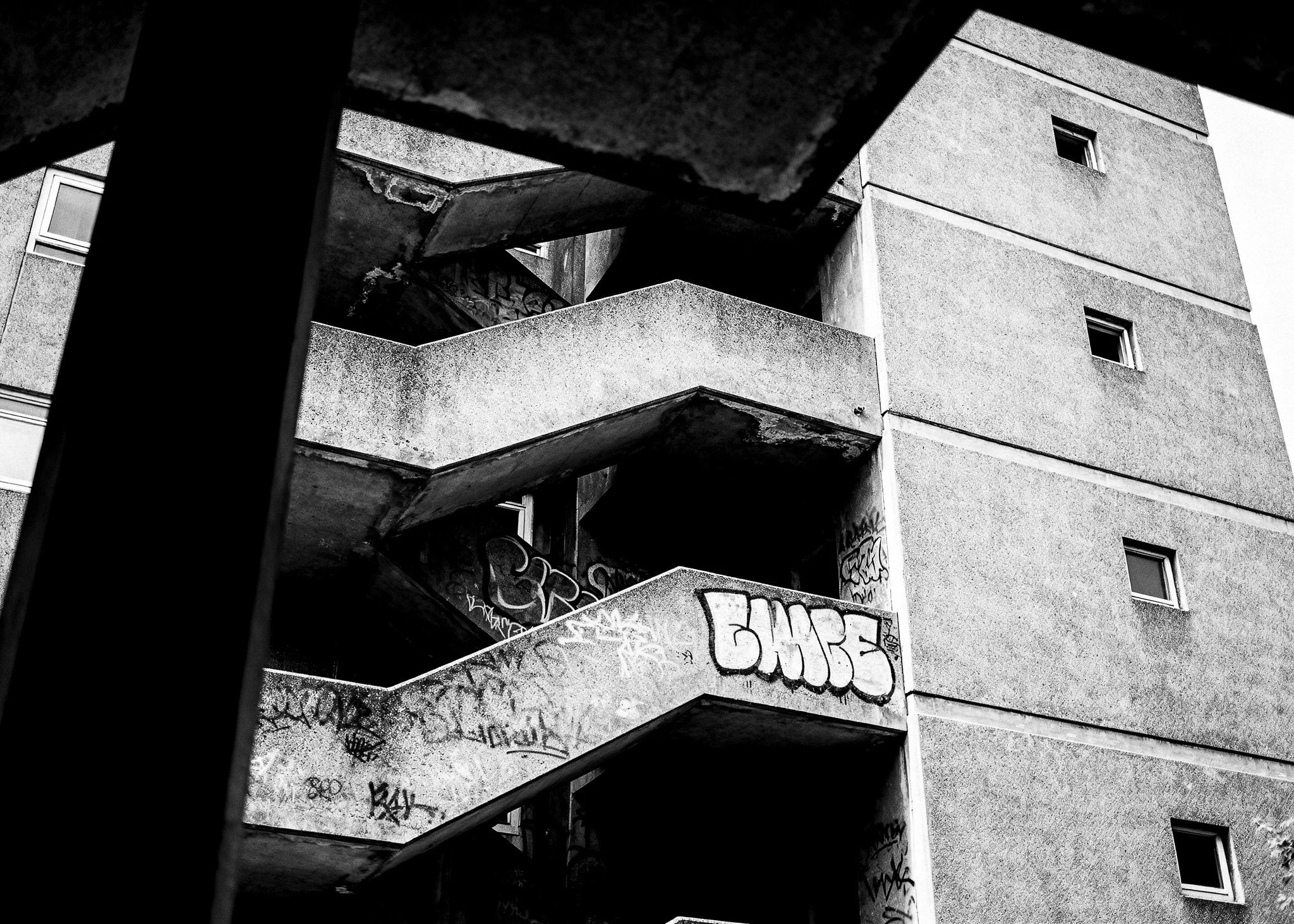
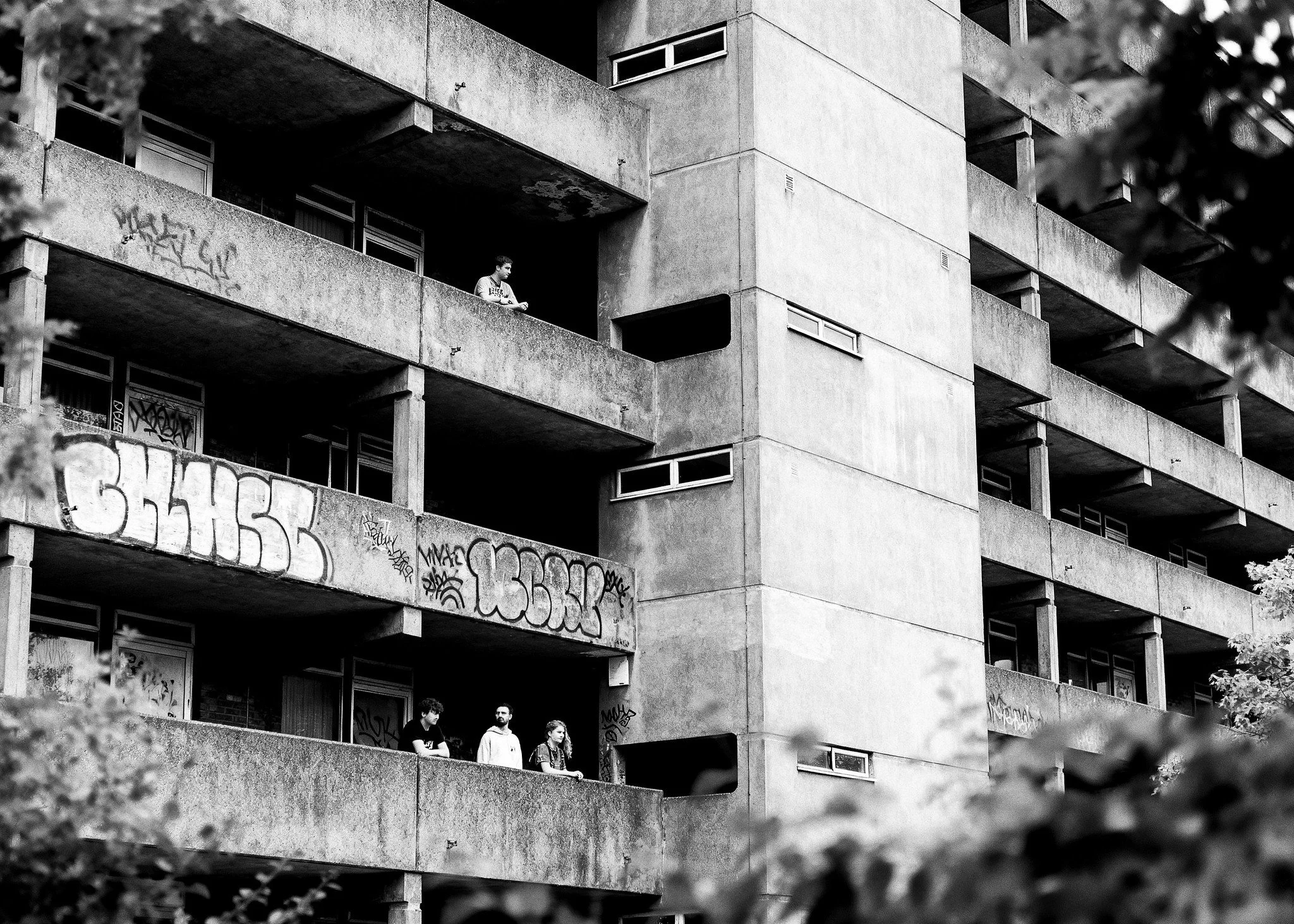
The long slab blocks, the deck-access walkways and the rows of identical windows were built by people who were sure they were changing how we live.
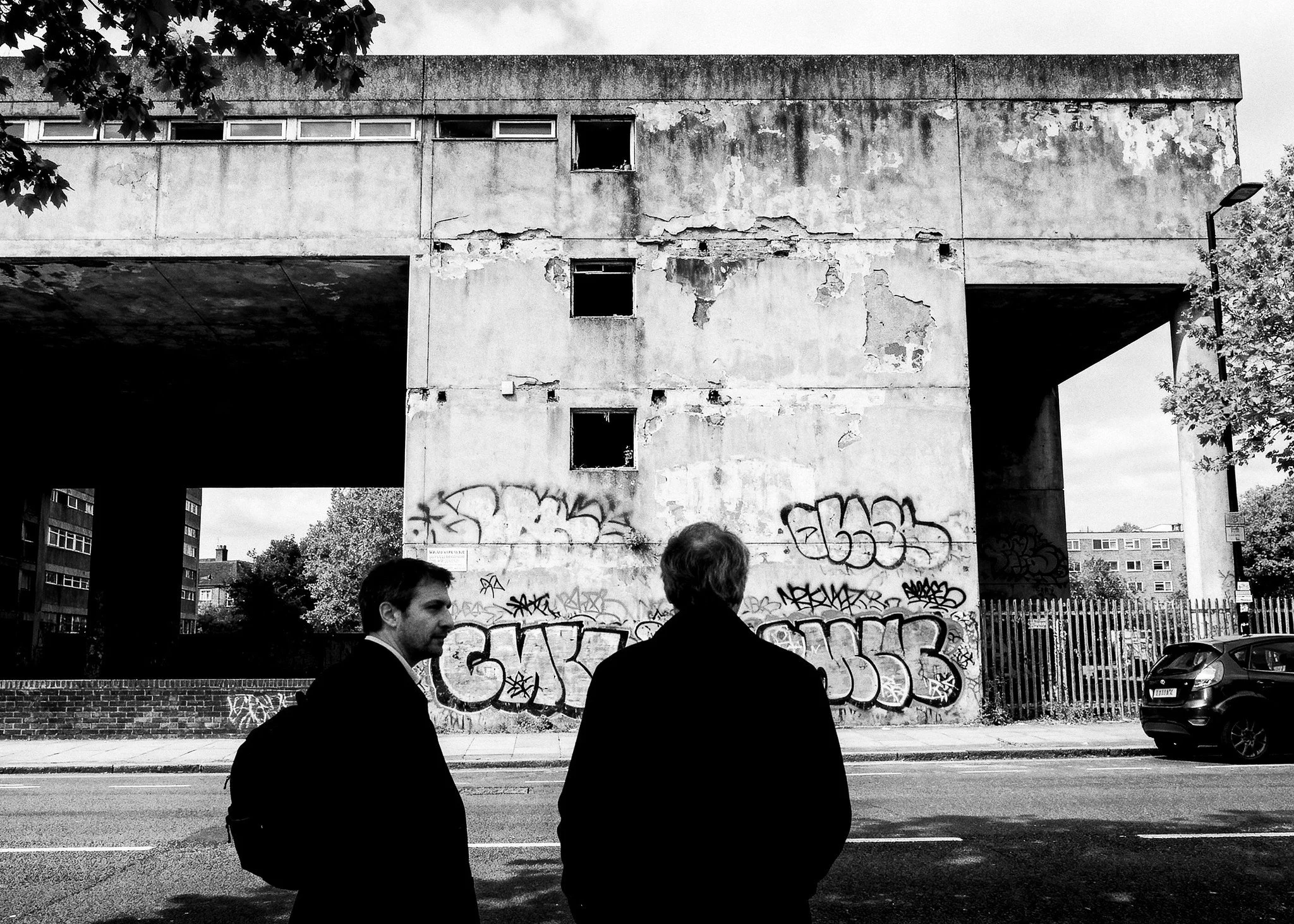
It didn’t last. Prefabricated system building cut costs, and the build quality often showed it. After Ronan Point partly collapsed in 1968, confidence in tower blocks never really recovered. Maintenance was put off, councils lost funding, and from 1980, Right to Buy moved many council homes into private ownership without replacing them. Many estates declined, and a lot of them have since been demolished.
None of the places in these images exist. My dad was a welder in the 1960s and worked on the clean-up after Ronan Point, which he only told me years later. He never said much more about it than that, but these buildings have a specific, nostalgic resonance for me as a result.